
The repo rate has been left unchanged at 4 per cent, Governor Shaktikanta Das said while announcing the decisions taken by the central bank's MPC.

This is part of the first batch of Supplementary Demands for Grants for 2020-21 moved by Finance Minister Nirmala Sitharaman in the Lok Sabha.

'Banks have to be braver, willing to take more risks and give confidence to the customer,' observes Joydeep Ghosh.

SBI was the top gainer in the Sensex pack, rallying over 10 per cent, followed by Kotak Bank, Dr Reddy's, UltraTech Cement, ITC and HDFC Bank. On the other hand, Axis Bank, Bharti Airtel, ICICI Bank, Maruti and HCL Tech were among the laggards.

'I found it unbelievable that L&T said 45,000 jobs were waiting to be filled because of unavailability of suitable skillsets.' 'So, when the Opposition sweepingly says there are no jobs, I'm sorry... I'm not saying it's raining jobs, but there are jobs. The (skill) gap has to be bridged.'

'The stabilisation of interest rates followed by reduction is going to happen over the next year.'

The Reserve Bank is planning to extend wholesale Central Bank Digital Currency (CBDC) for transactions for interbank borrowing or call money market, sources said on Tuesday. The pilot in the wholesale segment, known as the Digital Rupee -Wholesale (e-W), was launched on November 1, 2022, with the use case being limited to the settlement of secondary market transactions in government securities. "RBI is now planning to go into the interbank borrowing market.

Stressed MSME borrowers would be eligible for restructuring of debt, if their accounts were classified standard.

Shifting to floating rate deposits can work as an anaesthetic gel for some customers, points out Tamal Bandyopadhyay.

Banks have started refunding borrowers the compound interest charged on specified loan accounts during the moratorium period. Last week, the Reserve Bank of India (RBI) had asked all lending institutions, including non-banking financial companies, to ensure that the scheme of waiver of interest on interest for loans up to Rs 2 crore for the six-month moratorium period is implemented by November 5.

Banks' bad loans might cross Rs 10 lakh crore by the end of this fiscal, mainly on account of slippages in retail and MSME sectors, a study said on Tuesday. "NPAs are expected to rise to 8.5-9 per cent by March 2022, driven by slippages in retail, Micro, Small and Medium Enterprise (MSME) accounts, besides some restructured assets," the study by industry body Assocham and ratings firm Crisil said. The study titled 'Reinforcing the Code' said the Gross Non-Performing Assets (GNPAs) of banks are expected to cross Rs 10 lakh crore by March 2022.
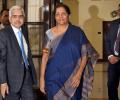
The focus of the meeting will be on enabling businesses and households to avail of the revival framework on the basis of viability, necessary steps like finalising bank policies and identifying borrowers, and discussing issues that require addressing for smooth and speedy implementation.
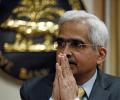
RBI Governor Shaktikanta Das on Tuesday asked private sector banks to ensure continuity in the provision of various financial services, including credit facilities to individuals and businesses, in the face of challenges brought on by the pandemic. Earlier this month, the governor had held a similar meeting with MD and CEOs of public sector banks. During the meeting with the MD and CEOs of select private sector banks, Das also impressed upon the banks to quickly and swiftly implement the measures announced by the RBI on May 5, 2021, in right earnest.

'With NPA under control, we should be able to post better profits.'

The Reserve Bank on Tuesday asked all lending institutions, including non-banking financial companies, to implement the waiver of interest on interest for loans up to Rs 2 crore for the six months moratorium period beginning March 1, 2020.
ICICI Bank, the second-largest private sector lender and state-owned Indian Bank on Monday raised their lending rates across all tenors in anticipation of a rate hike by the RBI later this week. The rates have been increased across all tenors under the marginal cost of funds-based lending rate (MCLR) system, a move that will make EMIs expensive for those who availed loans benchmarked against the MCLR. Under the revised rates, effective August 1, ICICI Bank's one-year MCLR has increased by 15 basis points or 0.15 per cent to 7.90 per cent, while the overnight MCLR rose to 7.65 per cent, as per information posted on the bank's website.

In an affidavit filed by Union finance ministry on behalf of the Union of India, it said that the relief to all borrowers in respect of compounding of interest during the period of moratorium would be admissible to the categories specified irrespective of whether the borrowers had availed the moratorium or not.

'In times of recovery, we may see a rural-urban divide with the urban pockets affected more by COVID-19, but the MFI business model should encourage banks to handhold them in this hour of crisis,' notes Tamal Bandyopadhyay.

Agriculture and allied activity loans are not eligible for the interest on interest waiver announced by the government last week, the finance ministry has clarified.

In a festival gift to borrowers, the finance ministry on Wednesday approved guidelines for a scheme for grant of ex-gratia payment of the difference between compound interest and simple interest for six months of loans up to Rs 2 crore.

The finance minister has emphasised on the quick disbursal of additional loans to MSMEs, to simplify process, formats and documentation.

Highlighting the role of MSMEs in enhancing exports and helping the country achieve self reliance, Union Minister Nitin Gadkari on Monday said India does not need to import from China. "Already in automobile sector, in many sectors now, in agriculture, automobiles, everywhere, we have already found the solutions. Now we don't need to import from China," said the minister. He observed that India was exporting a lot of items instead of importing them.
In a mixed bag for HDFC Bank ahead of the parent HDFC's merger with itself, the Reserve Bank of India has declined to make exceptions on certain aspects, and has offered some leeway on others. The country's largest private sector lender, which is aiming to conclude the merger with the home finance major by July, had written to the central bank seeking certain forbearances after announcing the $40-billion merger in April last year. In an exchange filing this evening, HDFC Bank said it received a response from RBI on Thursday and also said that there are a few pending issues.
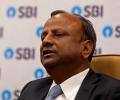
He said the SBI data showed that there is a rise in NPAs due to the coronavirus crisis but it is manageable as people have been cautious about increasing their liabilities especially in the retail, agriculture and MSME sectors.

Banks will also consider requests from MSMEs for restructuring their stressed standard assets. So far, only 25 per cent of the around 1 million eligible MSMEs have taken benefit of the RBI's special dispensation.

What will be its impact on the banks's balance sheets? Since banks need to provide for 10 per cent of the loans restructured, they would need Rs 50,000 crores to Rs 80,000 crore for this purpose, notes Tamal Bandyopadhyay.

A day after the Reserve Bank of India's (RBI's) Monetary Policy Committee hiked the policy repo rate by 50 basis points (bps), several commercial banks, including ICICI Bank and Bank of Baroda, raised their external benchmark-linked loan rates by an equal amount on Thursday. HDFC, the country's largest mortgage lender, too, increased its interest rates on housing loans by another 50 bps. In total, it has raised rates by 85 bps since May 4, when the RBI had increased the repo rate by 40 bps in an off-cycle meeting.

The RBI panel has also recommended a government-sponsored 'fund of funds' of Rs 10,000 crore to support the venture capital and private equity firms investing in the MSME sector.

India's economy is projected to slow to 6.5 per cent in the fiscal year starting April but will remain the fastest growing major economy in the world as it fared better in dealing with the extraordinary set of challenges the globe has faced, the Economic Survey 2022-23 said on Tuesday. India's gross domestic product (GDP) growth of 6.5 per cent in 2023-24 compares with an estimated 7 per cent expansion in current fiscal year (April 2022 to March 2023) and 8.7 per cent in the previous year. Like the rest of the world, India too faced an extraordinary set of challenges in tightening financial conditions and supply chain disruptions from a prolonged war in Europe but "withstood them better than most economies", the annual document detailing the state of the economy said.

'You peel one layer, then another layer, then another, but in the end, you will see that there is no onion inside.' 'This package has been packaged well, but there is nothing much inside the package!'

Gross bad loans of banks may rise from 6.9 per cent in September 2021 to 8.1-9.5 per cent by September 2022 if the Omicron variant strikes the economy hard, as per the financial stability report of the Reserve Bank released on Wednesday. The report also said that the rising stress level in the retail loan portfolio of banks -- the mainstay of bank credit for many years now -- was led by home loans, which grew in double-digits so far this fiscal. While asset quality improved, with gross non-performing assets (GNPA) and net NPA (NNPA) ratios declining to 6.9 and 2.3 per cent, respectively, in September 2021, the slippage ratio inched up during the same period as private sector banks showed a higher rate of deterioration in asset quality, as per the report.

The protocol aims to "democratise" lending, reduce costs of credit, and ensure accessibility of credit to small companies and street vendors, according to Nandan Nilekani.
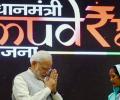
Not only has the Mudra loan mela generated no jobs, it has frittered away trillions of taxpayers' money and it's time to bury the scheme, argues Debashis Basu.

The Supreme Court has refused to interfere with the government and RBI's loan moratorium policy, and declined to extend the six-month loan moratorium period.

According to Fitch, the scheme could open a window for banks to build capital buffers while putting off full recognition of COVID-19 pandemic's impact on loan portfolios, but is reminiscent of a strategy adopted over 2010-2016 that delayed and exacerbated problems for banks.

Five Star Business Finance is in the business of providing loans to MSME entrepreneurs. Gireesh Babu finds out more about the company that plans to grow to 3,000 crore by 2020.

Finance Minister Nirmala Sitharaman presents her fourth Budget in Lok Sabha on Tuesday.

For a borrower, who has serviced his loan without missing any repayment, the banks will be willing to take over the loan, give a top-up, and would offer lower interest rates, says Tinesh Bhasin.

Finance Minister Nirmala Sitharaman on Friday announced a slew of measures to boost economic growth and address distress in various sectors

The NDA government will be following the footsteps of its predecessor, the UPA, which had introduced the concept of "loan mela" to boost credit by directing banks to lend to people through public meetings.
